No products in the cart.
Smart Home Wiring Guide for Oman — What to Do Before Plastering
The most expensive smart home mistake in Oman is made in one specific week — the week before plastering. This guide tells you exactly what to put in the walls while they’re still open, even if you’ll buy the devices years later.
The golden rule: cables are cheap, walls are expensive
Automation devices can be bought any time. The cabling can only go in cheaply once — before plaster. A villa wired correctly during construction can start with a modest system and grow to full luxury later, paying only for devices. A villa wired conventionally needs walls opened again for the same result. If you remember one sentence from this page: wire for the home you’ll want in ten years, buy devices for the budget you have today.
What goes in before plaster — the checklist
- KNX bus cable to every switch position, AC unit, curtain motor and ceiling sensor location — the green cable that makes everything else possible. See our KNX service.
- Neutral wire at every switch box — trivial now, painful later; many smart devices require it.
- Deep switch boxes (47mm+) — smart modules need the space; shallow boxes are the classic retrofit blocker.
- Curtain power + track provision at every window you might ever motorise — especially the majlis and bedrooms.
- AC control wiring — a control pair from each indoor unit back to the distribution board turns AC into your biggest saving. Details in our wired vs wireless comparison.
- CAT6 everywhere — TV points, camera points, access points, intercom, one to each corner of the house. Wi-Fi carries convenience; cable carries reliability.
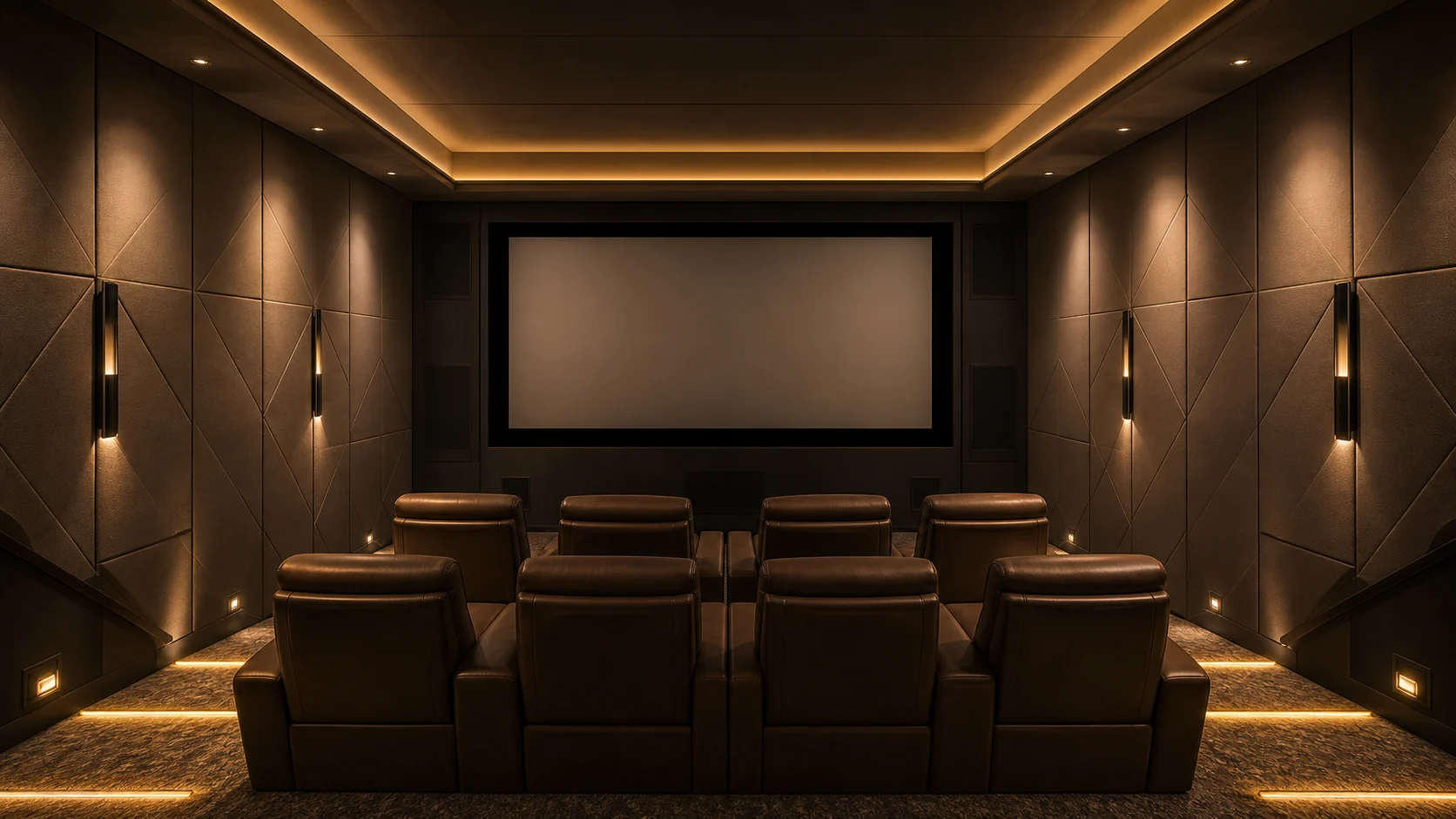
- Conduits to the future — empty pipes to the cinema wall, the garden majlis, the gate, the roof. An empty conduit costs almost nothing and saves a wall.
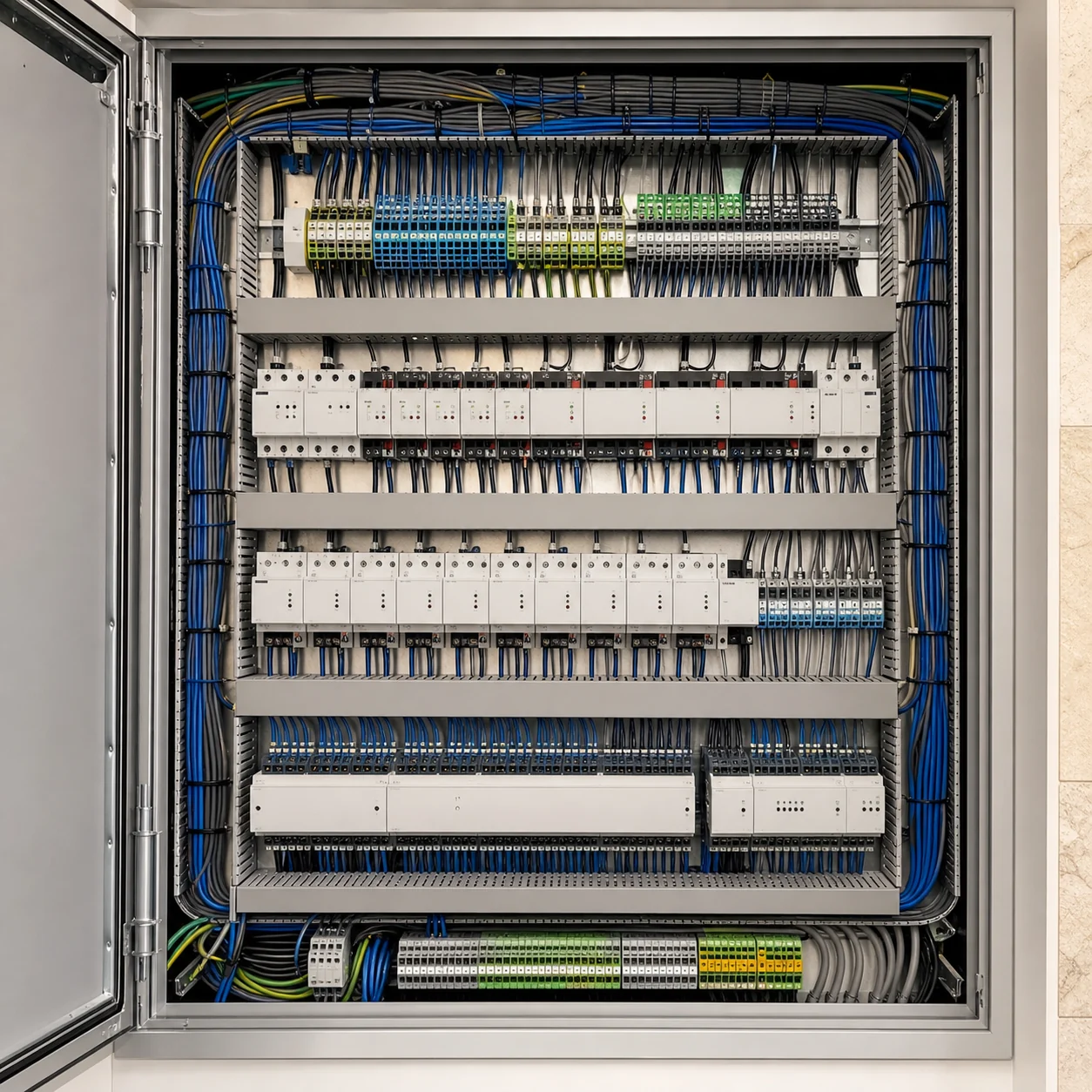
- A real distribution board location — ventilated, accessible, sized with 30% spare capacity. This cabinet is your home’s brain; don’t squeeze it above a wardrobe.
The Oman-specific details
- Heat: electronics in Oman live or die by ventilation. Boards belong in conditioned or shaded spaces, never in a west-facing garage wall cavity.
- The majlis: plan more lighting circuits than you think — layered scenes for guests are the single most-used feature in Omani homes.
- Staff and service areas: separate zones and schedules from family areas, planned at cabling time.
- Boundary walls & gates: run power + data to the gate now — intercom, camera and gate motor retrofits across a finished yard are miserable.
The three most common mistakes we see
- “The electrician said he can do smart later.” Conventional two-wire switch loops cannot become KNX. Later means chiselling.
- Buying devices first, planning second. A box of gadgets without a point-by-point design becomes a drawer of regret. Design first, always.
- No documentation. Insist on as-built drawings of every cable. Ten years from now, they’re gold. (It’s why we document everything we install.)
Timing: when to call us
The ideal moment is when your architectural drawings are done and before electrical first fix begins. We prepare the automation design, coordinate directly with your electrical contractor, and our cabling goes into the same conduits during the same works — minimal extra site time. Villa already plastered? All is not lost — read about wireless retrofit, or ask whether targeted chasing is worth it for your priorities.
Questions builders ask us
What happens when the internet goes down? Nothing stops — in a KNX system the intelligence lives in your distribution board, so keypads, scenes and schedules keep working locally; you only lose remote access until the connection returns.
Do the switches still work manually? Yes — every keypad works by touch exactly like a conventional switch; automation is a layer on top, never a replacement.
What does the automation engineer need from your consultant and contractor? Architectural and electrical drawings, the AC unit schedule and locations, a preliminary furniture layout (so keypads land where hands actually reach), and the proposed DB location — we ask for these in the first meeting and coordinate the rest directly with your electrical contractor.
How does cost change by construction stage? Before plaster: cabling joins the electrical works at modest extra cost. After plaster but before finishing: possible with limited chasing. After finishing: wired becomes expensive and we usually recommend wireless alternatives instead — details in the cost guide.
Building now? Send us your drawings for a free wiring review — we’ll mark up exactly what to run before plaster, whether or not you buy a single device from us this year. What does the full system cost? See real numbers here.